Alpha Discovery · Risk Filter
#47 How to Avoid Top-Score Traps in a Stock Scanner
04/10/2026 · 7 min read
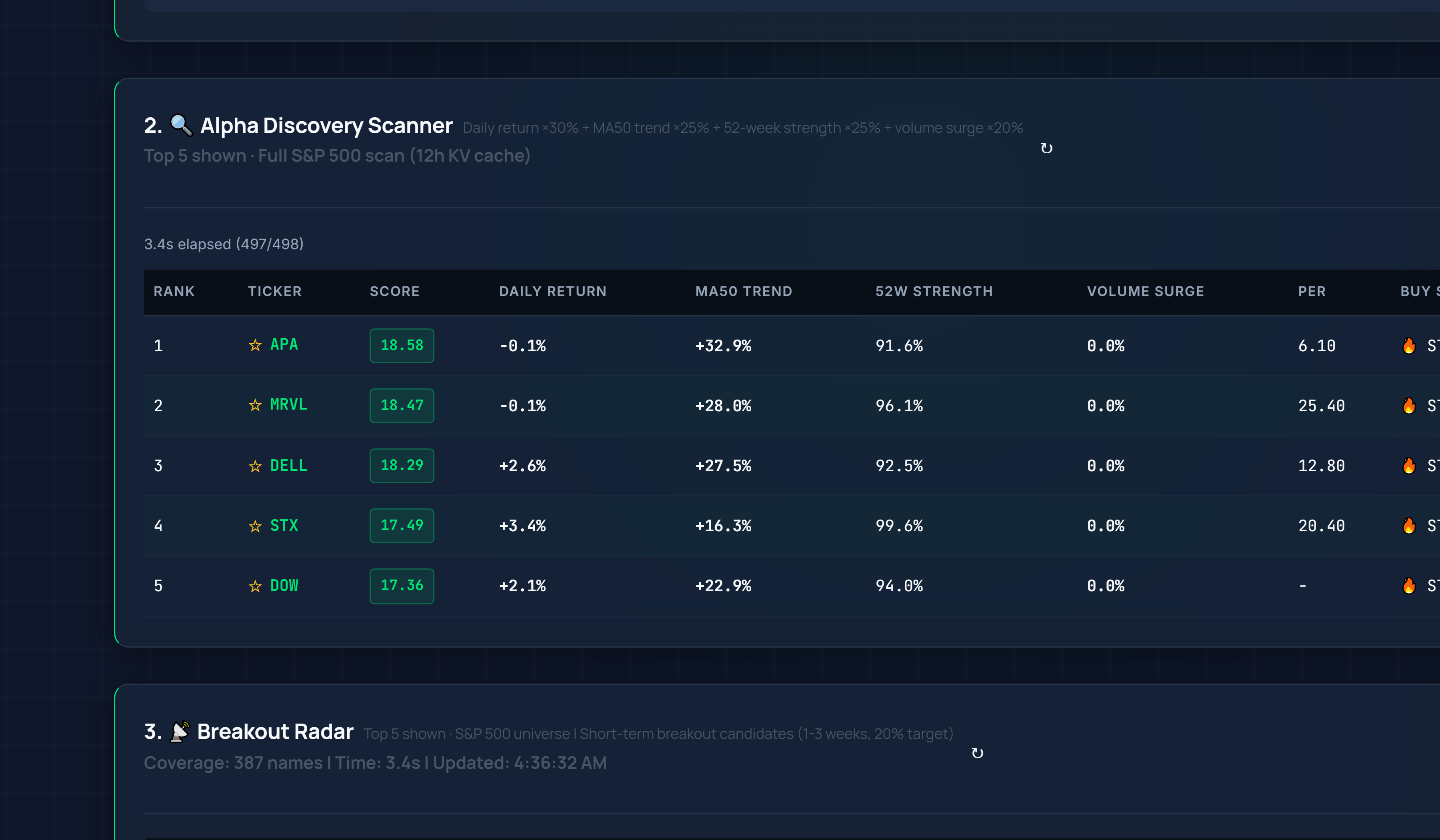
Live capture: Alpha Discovery Scanner results on Inveflo.
📍 Home › Alpha Discovery Scanner results on Inveflo. › Alpha Discovery Scanner results on Inveflo.
0) Where to Find This Widget
From the 12-tile dashboard, open ANALYSIS_1. The Alpha Discovery Scanner results table is on that page.

Live capture of Dashboard in Inveflo.
1) TL;DR
Top scores are not automatic buys. This framework helps you reject fragile setups even when ExplosiveScore looks strong. Use it before placing any order from scanner output.
2) Hook (Pain-Driven)
Most traders lose on high-ranked names because they assume rank equals quality. A top score can hide weak volume, stretched structure, or poor catalyst durability.
3) Problem
High rank without validation creates “confidence traps.” You see a big number, enter fast, and then realize participation and regime were not aligned.
4) Solution (Widget Introduction)
Use Alpha Discovery Scanner as an idea source, then apply trap filters using Composite Market Score, Volume Surge Ratio, and Catalyst Surge Score (CSS).
5) Logic Breakdown (Formula + Thresholds)
- ExplosiveScore ≥ 85 but Volume Surge Ratio < 1.2 → trap warning
- CSS below 40 for 2 sessions → catalyst decay warning
- Composite Market Score < 50 → environment mismatch warning
6) Practical Use (IF X → THEN Y)
- If top-ranked ticker has 2+ warnings, then skip entry.
- If only 1 warning and score persists, then reduce size and wait for confirmation.
- If no warnings and score trend improves, then stage entry.
Should I buy now? Only if trap risk is low. Is this signal strong? Strong means high score plus healthy participation and catalyst persistence. What should I do next? Filter first, then execute.
7) Common Mistakes
- Buying top rank without volume validation
- Ignoring regime weakness during score spikes
- Treating one-day catalyst moves as durable
This is not a standalone buy signal and requires trend confirmation and risk controls.
Frequently Asked Questions
What's the difference between a real top-rank winner and a top-score trap?
Real winner: High score + Volume Surge >1.5 + CSS ≥65 + Composite Market Score ≥55. Score persists for 2+ days. Trap: High score + Volume <1.2 + CSS declining + weak regime. Score spikes once then fades. Always check participation and regime before buying high rank.
If a stock is ranked #1 with 92 ExplosiveScore, can I skip the trap filters?
Never skip filters. ExplosiveScore 92 + Volume Surge <1.0 + CSS 30 = overvalued trap. Score doesn't capture participation or catalyst durability. Always apply all three gates: volume, CSS, market regime. A 92 score on weak participation is worse than a 75 score with strong participation.
How quickly can a high-score trap reverse and stop me out?
Fast. Weak-participation traps can reverse 3-5% within 30 min. You enter at +4%, get stopped at -2% (6% loss total). Rule: if volume weak at entry, set tight stop (below breakout level or 5-day low, not 10% below). Weak participation = tight stop required, even on high scores.
Can I buy on CSS decline if ExplosiveScore is still 85+?
No. CSS decline 2 sessions = catalyst decay warning. Even if ExplosiveScore stays high, momentum is fading. Skip entry or wait for CSS to re-accelerate. Rule: CSS <40 for 2 days = pause new entries. Don't fight fading momentum with high static scores.
Related Posts
CTA: Open Scanner and Find Opportunities
CTA: Open Scanner and Find Opportunities
Scan the full S&P 500, compare quality and signal scores, and build your watch list before market open.